Health & Safety Policy for Flat Clearance Haringey
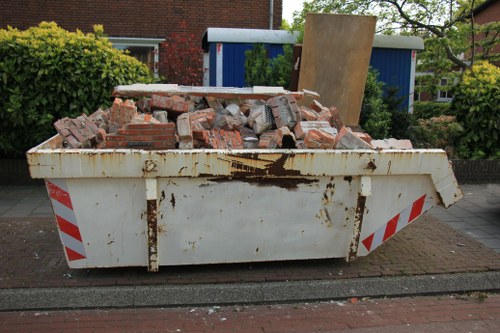 Flat Clearance Haringey is committed to protecting the health and safety of its staff, contractors and the public during all flat clearance and rubbish removal operations. This policy sets out our approach to managing hazards associated with flat clearing, waste removal and related rubbish company service area activities. The aim is to ensure that every job is planned and executed with appropriate risk control, that personnel are competent, and that environmental impacts are minimised. Safety is a core value and non-negotiable in every project we carry out.
Our responsibilities apply to all aspects of the flat clearance service, from initial site assessment through to loading, transport and disposal. We accept a duty to conduct work in compliance with applicable health and safety standards and to maintain safe systems of work. Every team member has a responsibility to report unsafe conditions and to cooperate with safe working procedures. The policy emphasises proactive risk management, clear supervision and the use of correct equipment for each task.
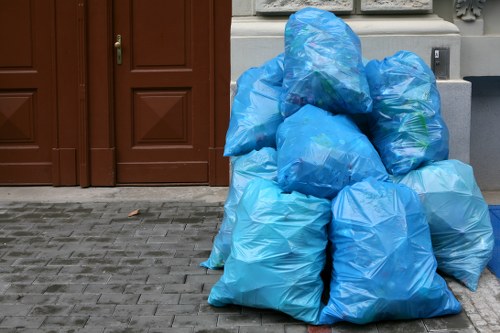 This document outlines the practical controls and expectations for the rubbish clearance process. It covers manuals handling techniques, safe use of tools and vehicles, control of hazardous waste, and procedures for unusual risks such as sharps, asbestos suspect materials and electrical hazards. Our flat clearing teams are trained to identify and isolate risks and to escalate concerns through defined reporting channels. The policy also outlines emergency procedures including first aid, incident and near-miss reporting and evacuation practices.
Risk Assessment, Controls and Operational Procedures
Before any flat clearance or tenancy clear-out begins, a documented risk assessment is completed. This assessment evaluates manual handling demands, access constraints, potential for falling objects and specific contamination risks. Controls are applied using the hierarchy of risk control: elimination, substitution, engineering controls, administrative controls and personal protective equipment. We favour methods that reduce manual handling such as mechanical aids, dollies and two-person handling practices for heavy or awkward items.
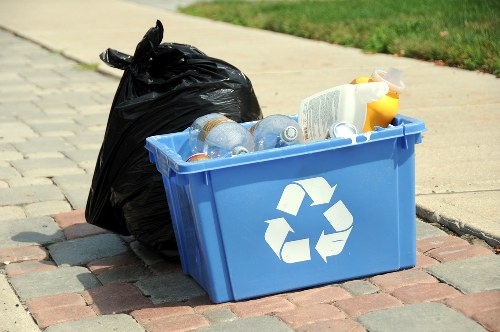
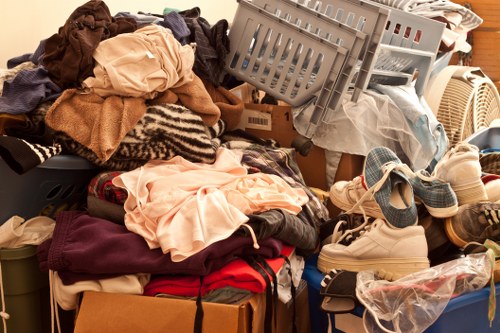 Our operational controls for rubbish removal include strict segregation of materials, clear labelling of hazardous items and secure containment for liquids and sharp objects. Waste streams are separated into recyclable materials, general refuse and designated hazardous waste for lawful disposal. Staff are instructed to never assume an item is safe; if there is doubt about chemical or biological contamination, work stops and a specialist assessment is sought. All vehicles used for waste transportation are maintained, tachograph and load restraint compliant, and are fitted with appropriate spill kits and signage where required.
To support safe flat clearing, we maintain written methods of work that are accessible to operatives. These include step-by-step procedures for stairway manoeuvres, balcony and lift use, and safe loading of vans and skip vehicles. Regular toolbox talks are conducted to reinforce safe systems, and supervisors ensure that job briefings include identification of the rubbish company service area boundaries and exclusion zones to protect the public.
Training, Personal Protective Equipment and Medical Readiness
 Training is provided to all employees and covers manual handling, safe use of equipment, hazardous waste awareness, and site-specific induction for each clearance location. New staff undergo mentored shifts with experienced operatives until competence is demonstrated. Refresher training is scheduled periodically and after any significant incident. We maintain training records to verify that personnel are qualified for the tasks they perform.
Appropriate personal protective equipment (PPE) is supplied and maintained. Typical PPE for a flat clearance job includes gloves, safety boots, hi-visibility clothing, eye protection and respiratory protection where dust or fumes are present. Use of PPE is mandatory where controls cannot fully reduce risk. We also provide specialized gloves and puncture-resistant containers when handling contaminated or sharp waste.
 Monitoring and continuous improvement are central to our health and safety approach. We conduct regular inspections, incident reviews and audits of our rubbish removal and waste management practices. Corrective actions are tracked until closure. Employees are encouraged to propose safer ways of working, and management reviews the health and safety policy annually to ensure it reflects evolving risks across the wider rubbish company service area and the practical experiences of operatives on site.
Incident reporting and investigation procedures are clearly defined. Any injury, near-miss or property damage is recorded, investigated and analysed to prevent recurrence. Root cause analysis informs updates to risk assessments and operational instructions. Where specialist hazards are identified, such as suspected asbestos-containing materials or electrical appliances, work is stopped and competent external advice is sought to ensure safe removal or remediation.
Health surveillance is available where tasks involve prolonged exposure to dust, noise or substances hazardous to health. We encourage staff to report any health concerns early and support access to occupational health services when indicated. Promotion of wellbeing, safe lifting techniques and fatigue management form part of our broader commitment to employee health.
Compliance is verified through planned audits, vehicle checks and spot observations. Contractors and sub-contractors are required to adhere to the same health and safety standards and must provide evidence of their competence. This policy is communicated to all stakeholders and forms part of contractual expectations for any flat clearing or rubbish collection work undertaken on behalf of the company. Maintaining a safe, lawful and efficient service across our waste clearance and rubbish company service area is integral to our operational ethos.
Review and continuous improvement: This policy will be reviewed annually or after significant change. Management is committed to allocating sufficient resources to implement and maintain the standards described. Everyone involved in flat clearance roles is expected to understand and apply these requirements to create a safer workplace and reduce environmental impacts associated with waste removal and clearance operations.