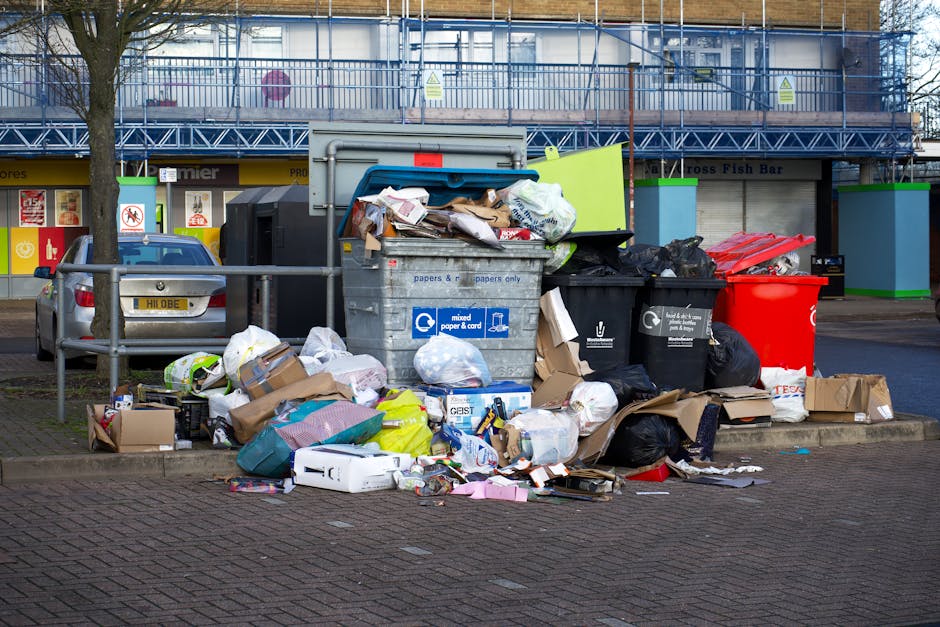
Avoid hidden rubbish removal fees in Haringey: what to know
If you have ever booked a rubbish clearance and then seen the final bill creep up for no obvious reason, you will know why this topic matters. In Haringey, where flats are tight on space, side access can be awkward, and one collection can involve a mix of furniture, bagged waste, and bulky items, hidden charges can appear fast. This guide explains how to avoid hidden rubbish removal fees in Haringey what to know before you book, what questions to ask, and how to compare quotes without getting caught out. A bit of care up front can save you money, time, and a fair amount of annoyance.
To make things easier, we will walk through the common fee traps, how pricing usually works, what good providers should explain clearly, and the practical steps that help you keep costs under control. You will also find a checklist, a comparison table, and a realistic example based on the kind of job people in North London deal with every week.
Why Avoid hidden rubbish removal fees in Haringey what to know Matters
Hidden fees are not just a nuisance. They change the whole experience. A job that looked affordable suddenly feels like a trap, and that leaves people either overpaying or delaying the clearance altogether. In a busy borough like Haringey, where many people are moving home, clearing after a refurbishment, or trying to reclaim space in a flat, a surprise fee can throw off an entire plan for the day.
The real issue is that rubbish removal can be priced in several different ways. Some companies price by load size. Others price by weight, item type, or access conditions. That is fine if everything is explained clearly. The trouble starts when extras are mentioned only after the team arrives. Think stair carry charges, parking issues, mattress surcharges, or additional labour for heavy items. None of that should feel like a surprise if the quote was properly set out in the first place.
It also matters because rubbish removal is often part of a bigger job. Maybe you are emptying a loft, clearing a garage, or sorting out an office move. If the waste part goes over budget, the rest of the project feels more stressful too. Honestly, the paperwork and bin bags are annoying enough already.
For many households, it helps to compare the quote with the kind of service they actually need. A flat clearance, for example, is very different from a simple furniture pickup. If you are dealing with a full property, it may be worth reviewing the scope of flat clearance, home clearance, or house clearance so you know what type of job is being priced.
Key point: the cheapest quote is not always the cheapest outcome. A transparent quote is usually the better deal because you know what you are actually paying for.
How Avoid hidden rubbish removal fees in Haringey what to know Works
Rubbish removal pricing usually starts with an estimate based on the amount and type of waste, then adjusts if the reality is different from what was described. That is perfectly normal. The issue is whether those adjustments were explained before anyone turned up.
Here is the basic flow. You describe the job. A company gives a quote. The team arrives, checks the waste, and confirms whether the job matches what was discussed. If the waste volume, item mix, or access details are different, the price may change. Straightforward enough. The headache begins when the customer was not asked the right questions during booking, so the final figure feels arbitrary.
In Haringey, the most common reasons for price changes are usually practical rather than mysterious:
- more waste than originally estimated
- heavy or awkward items needing extra labour
- restricted access, such as narrow stairs or no lift
- parking difficulty or waiting time
- items that need special handling
- unexpected separation of recyclable and non-recyclable materials
Some companies also split services into categories. For instance, if you need old wardrobes taken away, that may fall under furniture clearance or furniture disposal, while broken white goods may need fridge and appliance removal. A quote becomes much easier to understand when the service is named properly from the start.
A trustworthy provider will explain whether the price is fixed, estimated, or subject to access and item checks. That small detail matters a lot. If it is not clear, ask. Plainly. You do not need to be awkward about it.
Key Benefits and Practical Advantages
Clear pricing is not just about avoiding bad surprises. It makes the whole clearance process smoother and more usable for real life. You can plan the day, line up other contractors if needed, and know whether the job fits the budget before the van arrives outside.
Some of the biggest practical advantages are:
- Better budget control: you know the likely final cost before committing.
- Less stress on the day: no awkward renegotiation at the door.
- Faster decisions: easier to compare providers fairly.
- Cleaner scope: you know what is included and what is not.
- Fewer delays: less back-and-forth about access, labour, or item categories.
- Better service matching: the right team and vehicle can be sent first time.
There is also a trust benefit. When a company is open about charges, it usually signals a more professional approach overall. That does not guarantee perfection, of course, but it is a good sign. In our experience, the providers who are most specific about prices are often the ones who are also more careful about safety, recycling, and customer communication.
If you are comparing options for larger jobs, you may want to look at pages that explain the type of work involved, such as loft clearance, garage clearance, or office clearance. That helps you line up the service with the actual problem rather than guessing at the phone call.
Who This Is For and When It Makes Sense
This matters for anyone in Haringey who wants to dispose of waste without paying more than necessary. That includes tenants, landlords, homeowners, letting agents, small businesses, and people clearing properties after a move or refurbishment.
It is especially useful if you are:
- clearing a flat with stairs, shared hallways, or limited parking
- disposing of bulky items like wardrobes, sofas, or mattresses
- booking after builders have finished and the waste pile is bigger than expected
- sorting business waste, confidential materials, or office furniture
- planning a mixed clearance with both reusable and non-reusable items
- trying to compare rubbish removal against skip hire or self-loading options
For some people, the issue is not even a huge pile of junk. It is one awkward item with expensive implications. A single fridge, a heavy sofa, or a bulky mattress can trigger extra handling costs if the booking was vague. If that sounds familiar, pages like mattress and sofa disposal and fridge and appliance removal can help frame what kind of service is actually needed.
And yes, sometimes people think, "I'll just get the cheapest van I can find." Fair enough, but that can backfire if the job needs more labour or a larger load allowance than expected. Cheap on the front end, expensive on the back end. Seen that more than once.
Step-by-Step Guidance
If you want to avoid hidden rubbish removal fees in Haringey, a little structure goes a long way. Follow these steps before you book anything.
1. List everything that needs removing
Do not just say "a bit of rubbish." Break it down. Write down furniture, bags, appliances, garden waste, building debris, or mixed household items. If you can, take a few photos from different angles. It makes the quote much more accurate and reduces the chance of a mismatch later.
2. Check access and parking in advance
Is there a lift? Are there narrow stairs? Is the property on a busy road where parking is awkward? Is there a loading bay or permit requirement? These details matter because labour time and loading difficulty can affect the price. In a place like Haringey, access is often the quiet reason a job becomes more expensive.
3. Ask what the quote includes
Does it include labour, disposal, recycling, congestion in loading time, and VAT if applicable? Ask directly. A good provider should not dance around this. If the answer sounds vague, take that as a signal to slow down.
4. Ask about common extra charges
Before agreeing, ask whether there are additional fees for stairs, heavy lifting, appliances, mattress removal, hazardous waste, out-of-hours work, or parking problems. You do not need to interrogate anyone like a detective. Just be clear.
5. Confirm the waste type
Some waste needs special handling. Hazardous items, certain electrical goods, and contaminated materials may not be treated like ordinary rubbish. If your job includes anything unusual, check a dedicated page such as hazardous waste disposal before assuming it can be bundled in.
6. Read the terms before you book
This part is not glamorous, but it matters. Terms and conditions should explain what happens if the load is larger than expected, what counts as a change in scope, and how payments are processed. If you want a sense of how a company handles that side of the job, see terms and conditions and payment and security.
7. Keep proof of the agreed price
Save the quote by email or message. A written record makes it much easier to resolve any misunderstanding. Not exciting, but extremely useful when everyone is in a hurry and the van is parked outside.
Expert Tips for Better Results
Small decisions make a big difference here. The aim is not just to pay less. It is to pay the right price for the right job.
- Be honest about volume. Underselling the amount of waste is the fastest route to a price change.
- Send photos, not just descriptions. "Two chairs" and "two chairs plus broken shelving, a rug, and three bags" are not the same thing.
- Group similar items together. It helps the provider estimate load space and handling time.
- Separate reusable items if asked. Some clearances become easier to plan when reusable furniture is identified early.
- Ask for the job to be itemised if it is complex. That is especially helpful for mixed household clearances or business premises.
- Think about timing. Morning jobs can sometimes be easier where parking is tight or the street fills up quickly.
One useful habit is to compare the proposed service with the actual task. A mixed room of old furniture and general junk may be better suited to home clearance, while office desks, filing cabinets, and paper waste are more aligned with business waste removal. A better match usually means fewer surprises.
And one more thing: if a quote sounds unusually low, ask what is missing. Sometimes the missing part is the bit that later becomes your problem.
Common Mistakes to Avoid
Most hidden-fee issues come from a handful of avoidable mistakes. Nothing dramatic, just easy oversights that add up.
- Giving only a rough verbal description. "A few bits" is too vague for pricing.
- Ignoring access details. A ground-floor collection and a fourth-floor walk-up are not the same job.
- Assuming all waste is priced the same. Bulky items, mixed loads, and special waste can be handled differently.
- Not asking about disposal charges. Some prices look low because disposal or processing costs were left out.
- Forgetting about parking or waiting time. That can matter in busy parts of London.
- Not checking what the provider can actually take. If the load includes appliances or hazardous items, the scope must be clear.
- Booking in a rush. When people are in a hurry, they skip the awkward question that would have saved them money.
It is also worth avoiding the trap of comparing only headline price. A proper comparison looks at service scope, labour, item restrictions, and payment terms. The cheapest quote on paper is not always the best value in real life.
Tools, Resources and Recommendations
You do not need specialist software to avoid hidden rubbish removal fees, thankfully. A few simple tools are enough.
- Phone camera: take clear photos of the waste from different angles.
- Simple notes app: write down item counts and room locations.
- Measuring tape: helpful for large furniture and awkward items.
- Basic checklist: note stairs, lift access, parking, and time windows.
- Email trail: keep all quoted details in writing.
For company reassurance and service standards, it can also help to review pages that explain how a provider works behind the scenes. For example, about us can give background on the business, while recycling and sustainability explains how waste is handled after collection. If you are dealing with business paperwork, confidential shredding may also be relevant.
Sometimes the best resource is simply a better quote form. A structured pricing page such as pricing and quotes should make it easier to see what information the company expects before it gives a figure.
Law, Compliance, Standards, or Best Practice
With rubbish removal, legal and best-practice concerns are not something to gloss over. Waste must be handled responsibly, and a legitimate provider should understand duty of care principles, safe handling, and proper disposal routes. You do not need to know every detail of UK waste law to protect yourself, but you should expect a professional service to work in a sensible, compliant way.
In practical terms, that means the provider should be clear about what it can take, how certain materials are separated, and whether any waste needs special handling. If you are disposing of items that may contain refrigerants, electrical parts, sharp materials, or other potentially hazardous elements, that should be treated with care rather than squeezed into a standard job.
Best practice also includes:
- clear written quotations
- transparent terms around extra labour or access issues
- appropriate vehicle loading and safe lifting practices
- proper recycling or disposal routes where possible
- careful handling of restricted waste streams
If you want to dig deeper into how a company manages safety and responsibility, you can review insurance and safety and health and safety policy. Those pages are useful because they show whether the business takes the basics seriously, which is exactly what you want before anyone starts lifting heavy furniture down a staircase.
For skip users, the question of what can be loaded into a container is also relevant. If you are considering another route, what can go in a skip is a helpful point of reference. It is not the same as a rubbish removal job, but it does sharpen your understanding of what waste types need extra attention.
Options, Methods, or Comparison Table
Different waste disposal methods suit different situations. Comparing them side by side makes it easier to spot where hidden fees tend to show up.
| Option | Best for | Typical pricing shape | Risk of hidden fees | Notes |
|---|---|---|---|---|
| Rubbish removal service | Mixed loads, bulky items, quick clearances | Load-based or job-based quote | Medium if scope is vague | Best when the provider confirms access and item type clearly |
| Skip hire | Longer DIY projects, ongoing waste | Container hire plus permit or placement costs | Medium if you misunderstand fill limits or banned items | Useful if you are happy loading it yourself |
| Self-transport to a facility | Small loads and people with time and transport | Fuel, time, and any facility charges | Low on supplier fees, higher on your time | Can be cheaper, but less convenient |
| Specialist item disposal | Appliances, mattresses, sofas, hazardous items | Item-specific pricing | Low if the item category is named correctly | Useful where handling needs are more specific |
The right choice depends on the job. A full flat clear-out is rarely the same as a single-item pickup. A garden tidy-up differs again. If the load is outdoors, look at garden clearance; if it is a larger domestic reset, house clearance may be the better fit. Matching method to job is one of the simplest ways to avoid extras.
Case Study or Real-World Example
Let's say a tenant in Haringey is moving out of a third-floor flat. They have a broken sofa, a mattress, two chairs, four bin bags, and an old fridge in the kitchen. They ask for a quick quote and say, "just a few bits of rubbish."
The provider gives a low price based on the vague description. On arrival, the team sees the fridge, tight stair access, and more volume than expected. The quote changes. Not because anyone is being dishonest, necessarily, but because the job was under-described from the start.
Now compare that with a better approach. The tenant sends photos, explains there is no lift, confirms the floor level, lists the fridge separately, and asks whether the price includes labour and disposal. The provider can then quote accurately. There may still be a price difference if the load is larger than expected, but it is far less likely to feel like a surprise.
That is really the heart of this topic. The hidden fee problem usually begins when the job is described too loosely, not when the actual collection takes place. Clear information at booking time changes everything.
Practical Checklist
Use this checklist before you agree to a collection. It is simple, but it catches most of the problems that cause surprise charges.
- Have I listed every item or waste type accurately?
- Have I shared clear photos of the load?
- Have I described access, stairs, lifts, and parking?
- Have I asked whether labour is included?
- Have I asked about extra charges for heavy or bulky items?
- Have I confirmed whether appliances or special waste are accepted?
- Have I checked the written quote against the job description?
- Have I saved the quote or message in writing?
- Have I reviewed the terms and payment details?
- Do I know what happens if the load changes on the day?
If you can tick all of those off, you are in a much stronger position. Simple as that.
Conclusion
Avoiding hidden rubbish removal fees in Haringey is mostly about clarity. Know what you need removed, explain the access properly, ask about extras, and keep everything in writing. That process takes a little time, but it protects your budget and makes the whole service feel calmer and more professional.
Whether you are clearing a flat, getting rid of furniture, or dealing with mixed household waste, the same rule applies: the more specific you are, the less room there is for surprise charges. And if a quote still feels unclear, pause and ask again. Better a small delay than a nasty bill later. To be fair, that applies to most things in life.
Get a free quote today and see how much you can save.
With the right questions and a clear scope, rubbish removal stops being a gamble and becomes just another job handled properly. That is a good feeling, especially when the room finally looks bigger and the air feels lighter.
Frequently Asked Questions
What are hidden rubbish removal fees?
Hidden rubbish removal fees are extra charges that were not made clear before booking. They often relate to access, labour, heavier items, mixed waste, or disposal conditions. The best way to avoid them is to get a written quote that explains what is included and what may cost more.
How do I know if a rubbish removal quote is fair?
A fair quote should match the size of the load, the type of waste, and the difficulty of access. It should also explain whether labour, disposal, and VAT are included. If the quote is vague or unusually cheap, ask for a clearer breakdown before agreeing.
Do stairs or no lift usually cost extra?
Often, yes. Stairs and lack of lift access can increase labour time and make the job more difficult, so some companies price that in. You should always mention access details early so the quote reflects the real work involved.
Can I avoid surprise charges by sending photos?
Yes, photos help a lot. They give the provider a better sense of volume, item type, and access. A few clear pictures from different angles are usually more useful than a quick verbal description.
Are mattresses, sofas, and fridges treated differently?
They can be. Large furniture and appliances may need specific handling or disposal arrangements, which is why they are sometimes priced separately. If those items are part of your load, mention them specifically when you request the quote.
What should be included in a rubbish removal quote?
At minimum, the quote should make clear the collection scope, labour, disposal or tipping, and any likely extra charges. It should also say whether the price is fixed or estimated. If any of that is missing, ask for clarification before booking.
Is rubbish removal better than skip hire for avoiding hidden fees?
It depends on the job. Rubbish removal can be easier for bulky items and quick clearances, while skip hire may suit ongoing DIY waste. Either option can produce surprises if the rules are not clear, so the real issue is understanding the pricing model.
What happens if I have more waste on the day than I first said?
The price may change if the waste volume is larger than described. That is why it helps to be accurate from the start. If you think the amount might change, tell the provider in advance rather than leaving it to be discovered on arrival.
Do I need to worry about hazardous waste charges?
Yes, because hazardous or restricted waste usually needs special handling. It should never be mixed into a standard collection unless the provider has confirmed it is acceptable. If you are unsure, ask before the booking is confirmed.
How can businesses in Haringey avoid extra waste removal costs?
Businesses should give a precise list of items, confirm access, and separate confidential or specialist waste where relevant. For offices, it helps to book against the correct service category and to keep the scope tidy from the beginning.
Should I read the terms and conditions before booking?
Yes, absolutely. It is a small effort that can prevent a lot of frustration later. The terms should explain payment, scope changes, and any exceptions that might trigger a higher charge.
What is the easiest way to compare providers?
Compare like with like: the same waste description, the same access details, and the same service scope. If one quote looks cheaper but excludes labour or disposal, it is not really a better deal. A clear quote is usually the safest comparison point.